
Getting around
How to ride the bus in Mazatlán
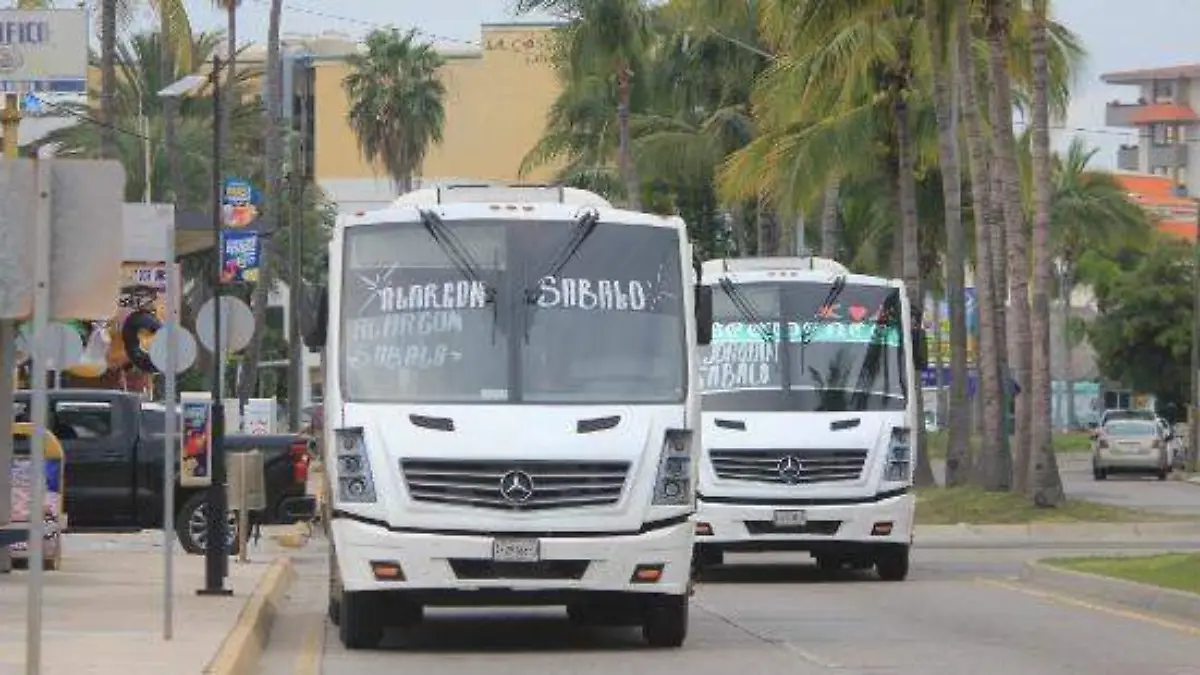
How to spot your bus
There are no route numbers on the front. The destinations are written by hand across the windshield — read those, not the colour of the bus. If the names match either end of the route you want, it's yours.
Route by route
4 routes worth knowing
- Sábalo-CentroMX$16.00 · 6 key stops · 05:30 - 22:00
- Cerritos-JuárezMX$15.00 · 5 key stops · 05:30 - 21:30
- Alarcón-SábaloMX$15.00 · 4 key stops · 05:30 - 21:30
- Urías-SábaloMX$15.00 · 4 key stops · 05:30 - 21:30
Fares on the routes we've checked run MX$15.00–MX$16.00. Every route below was verified in person; we say so on the page when one hasn't been.
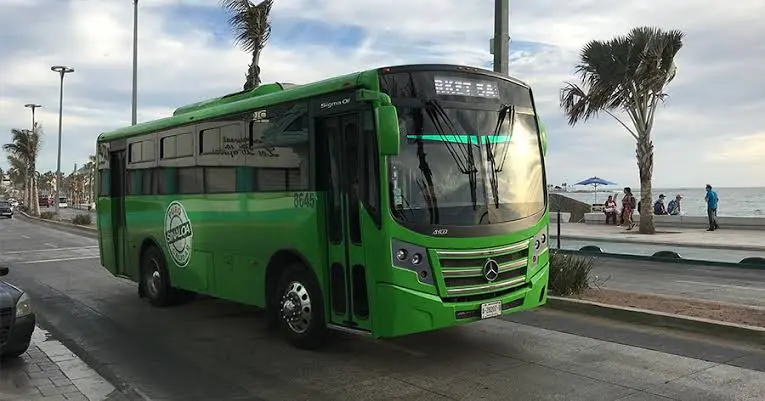
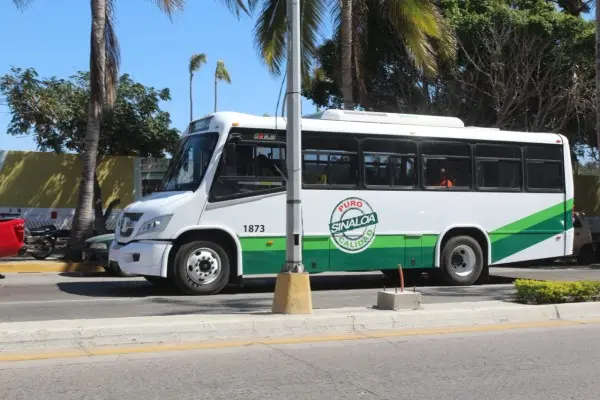

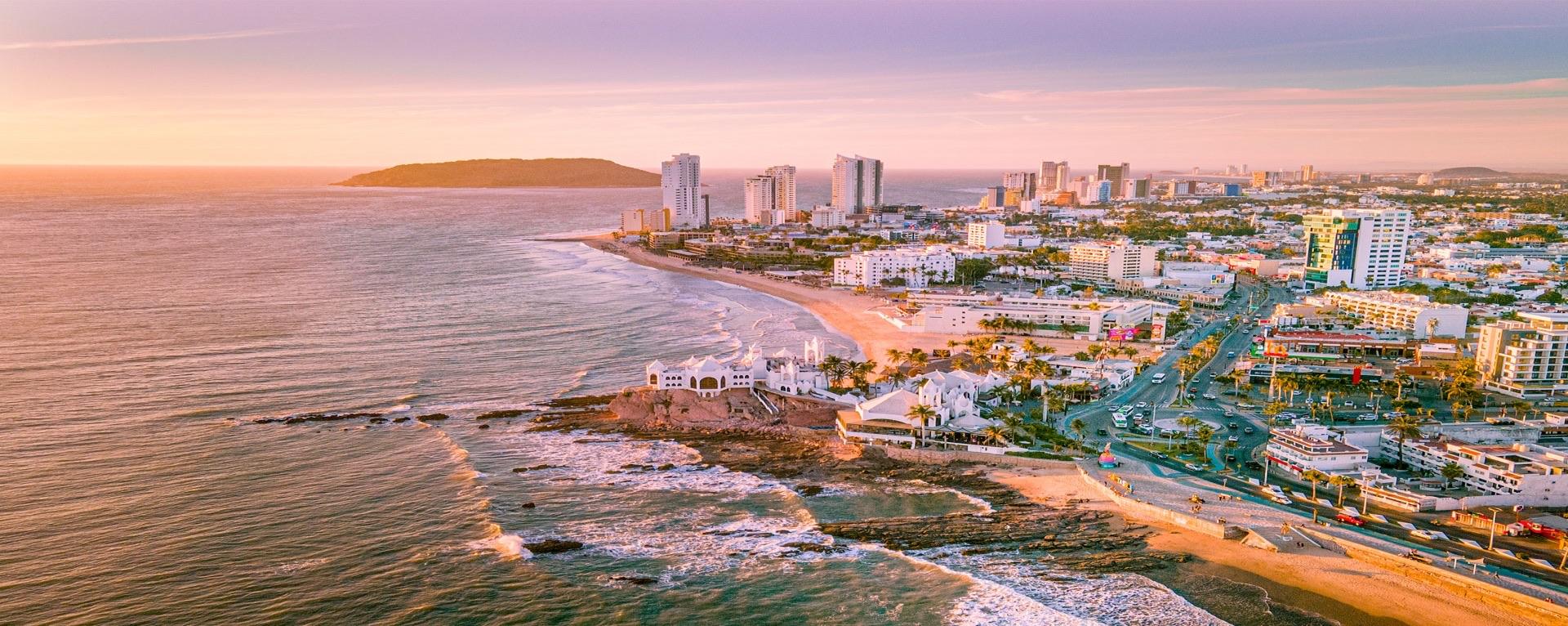
The tourist corridor
Sábalo–Centro is the one route that runs this whole stretch, end to end.
Paying your fare
You pay in cash, to the driver, the moment you step on. No machine, no card reader, no transfers.
Air-conditioned buses — the green, white-and-red and tourist-style units — charge 15 pesos, except Sábalo–Centro, which charges 16. The older buses without climate control charge 13. Each route page lists its own fare.
Carry coins, or notes of 20 or 50. A 100-peso note gets taken reluctantly. Hand over 200 or 500 and you will either be waved off or left standing while the driver scrapes together change.
There is a student fare of roughly 3.50 to 4.50 pesos, but only with an activated Tarjeta Inteligente de Sinaloa — an ordinary student ID will not do it. Small children pay full fare if they take a seat.
Catching the bus and getting off
There are marked stops along the malecón and the main avenues, but in practice the driver will pick you up wherever you flag him down, as long as he is not sitting at a green light or stuck in a centre lane.
To flag one, put your arm out firmly, angled down toward the road, as the bus comes into view.
You board at the front, always, and get off through the rear door.
To get off, press the buzzer — a button on the grab rails or by the back door. If it does not work, and sometimes it does not, call toward the front: ¡Bajan! or ¡En la esquina, por favor!
Signal about a block ahead, 50 to 100 metres, so he can pull over instead of standing on the brakes.
When to ride, and when not to
Buses fill up from 7 to 9 in the morning, when school and work start, and again from 6 to 8 in the evening.
After 9 pm most routes thin out sharply. Sábalo–Centro keeps running through the tourist strip until around 10:30.
Sundays and holidays run less often. Expect your wait to roughly double, and expect service to wind down earlier.
At night, plainly: inside the tourist corridor — Zona Dorada, the malecón, Centro — the bus is safe, just slow. Outside that circuit, or after 10 pm, take a rideshare or a taxi instead.
Buses vs pulmonías, taxis and rideshare

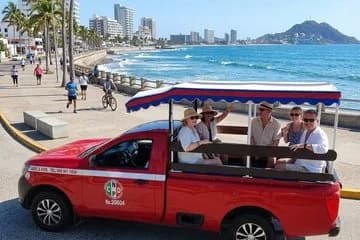
A pulmonía is Mazatlán's own invention: an open-sided vehicle built on a classic Volkswagen chassis, canvas roof, no doors, no windows, and a sound system considerably larger than the car.
The red ones are aurigas: the same open-air idea on a pickup chassis, bench seats under a canopy, and room for a bigger group. They run 300 to 700 pesos depending on distance, or 200 pesos an hour if you hire one by time.
Golden Zone to Centro, roughly: 15 pesos a person on the bus. Uber or DiDi, 100 to 160 depending on surge. A red or green taxi, 180 to 220. A pulmonía, 200 to 250.
With taxis and pulmonías, agree the price before you get in — every time. Ask ¿Cuánto me cobras al Centro? and settle it on the kerb. Uber and DiDi set the price in the app.
Both apps work well here and will collect you at any hotel entrance.
Getting to El Faro and Centro
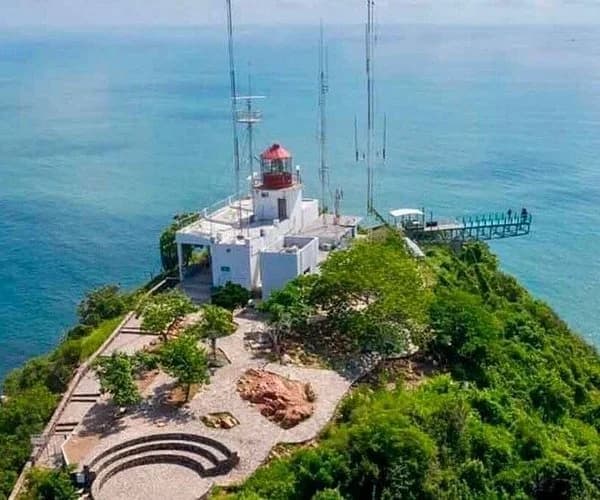
Sábalo–Centro is the one route that covers the tourist zone end to end, which makes it the one most visitors actually want.
For the lighthouse, take Sábalo–Centro to the end of the line, near the urban bus terminal by the docks on Playa Sur. From there it is a 5 to 10 minute walk to the base of Cerro del Crestón. Cerritos does not go there.
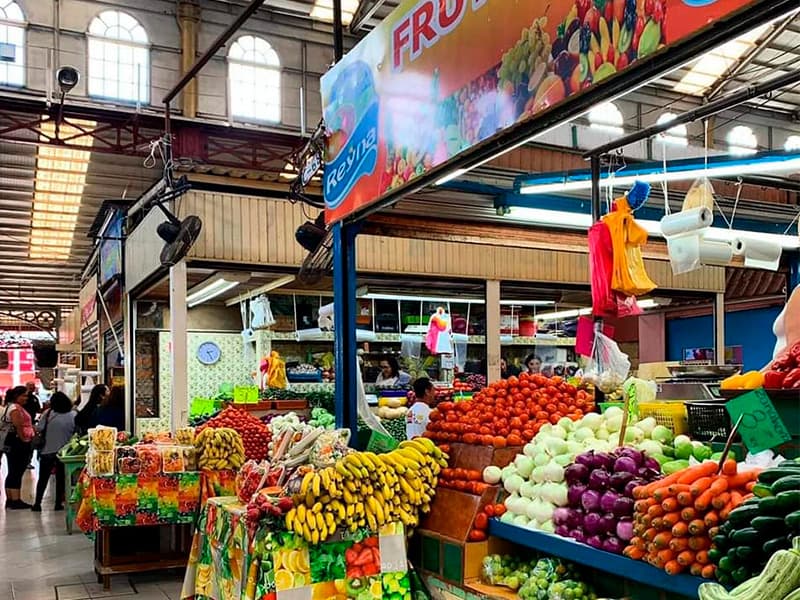
For the cathedral and Mercado Pino Suárez, ask to be let off on Benito Juárez or Zaragoza and you will be a block or two away. For Plazuela Machado, get off near the market or around Olas Altas and Heriberto Frías, then walk three or four blocks.
Golden Zone to Centro takes 35 to 50 minutes by bus depending on traffic, against 20 to 30 by car.
The glass viewpoint at the top runs 6:00 am to 5:15 pm. Climb early, 6:30 to 8 am, to beat the heat. If you want the viewpoint, start up well before 5:15 — a sunset climb gets you the hill, but the glass platform will already be shut.
Getting to and from the airport
No city bus serves Mazatlán International (MZT) in any way that is useful with luggage. Do not plan around one.
The shared airport van runs about 150 to 200 pesos a person. An authorised private airport taxi is around 450 to 600 to the Golden Zone. Going the other way, hotel to airport, Uber or DiDi runs 250 to 350.
Arriving is the awkward direction: app pickups are generally restricted inside the airport's federal zone, so you would have to walk out to the highway to be collected. Arrange your transfer at the official transport desks inside the arrivals hall, before you step outside.
Either direction, the trip is 30 to 45 minutes over roughly 25 to 30 km, to Centro or the Golden Zone.